
Quality
How Telmone approaches product quality
Quality is treated as a connected process: define requirements, qualify inputs and manufacturers, review formulas or constructions, test what is relevant, approve labels and documentation, and keep records for change and follow-up.
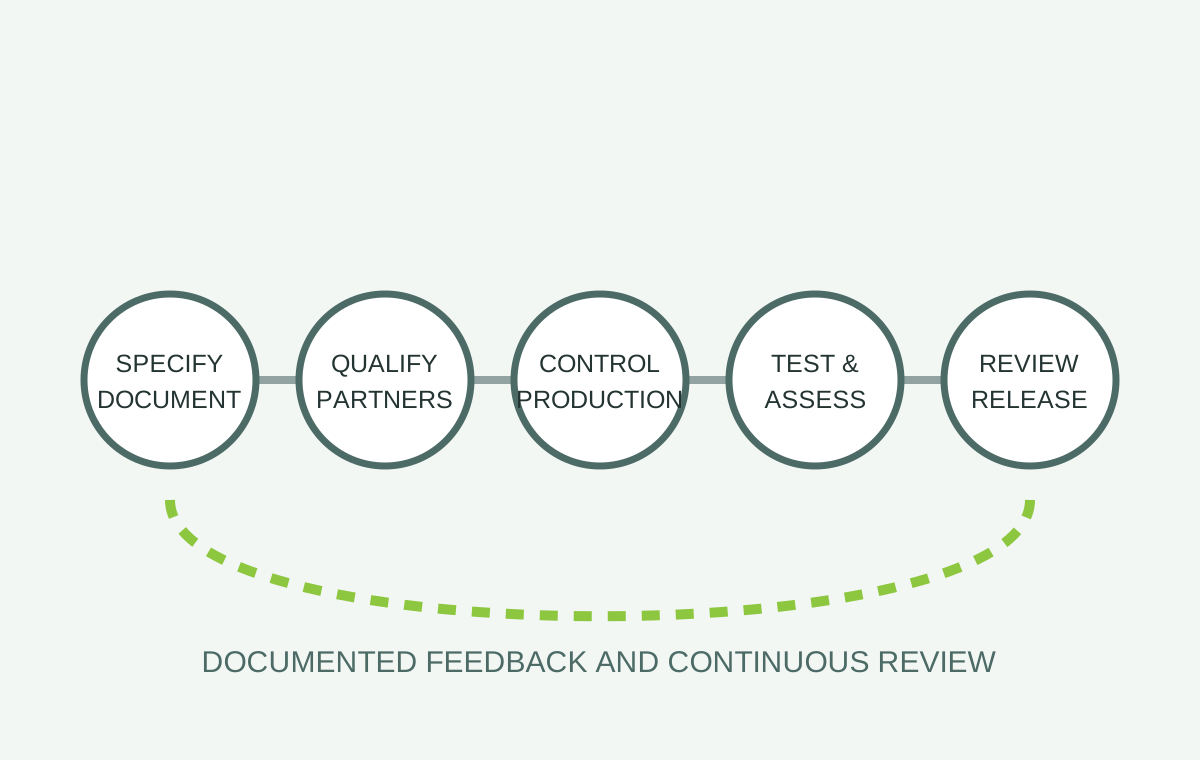
A practical quality lifecycle
From product requirement to ongoing review
No single certificate or laboratory result replaces the complete chain of decisions needed for a finished product.
Define
Set category, intended use, formula or material requirements, labelling needs and acceptable claims.
Qualify
Review ingredient or material suppliers, manufacturing capabilities, relevant certificates and documentation.
Check
Apply the tests, assessments and document reviews appropriate to the product category and risk.
Release
Confirm formula or construction, packaging, label, warnings, traceability and approved information before market use.
Review
Monitor changes, complaints, supplier information, regulations and evidence that may require an update.
Manufacturing & GMP
How Telmone works with affiliated, managed and qualified European contract manufacturing partners and how certification is described accurately.
Read manufacturing approach →Ingredients & materials
How purpose, identity, specification, compatibility, dose or concentration, safety and labelling guide selection.
Read the ingredient approach →Testing & safety
How stability, microbiological work, safety assessment, dermatological testing and ingredient analysis support decisions.
Read testing approach →Standards & certifications
What GMP and ISO references can show—and what they do not prove by themselves.
Understand standards →Responsible claims
How Telmone narrows health, performance, natural and environmental language to supportable statements.
Read the policy →Editorial method
How company and product information is researched, reviewed, sourced, corrected and updated.
See the method →Transparency
What Telmone.nl can and cannot publish
Public pages can explain the manufacturing model, the kinds of controls applied, the role of product documentation and the standards relevant to a category. Confidential manufacturing-partner identities, locations, formulations, laboratory reports or commercial agreements may not be published.
That confidentiality does not justify vague claims. Where a certificate or test is mentioned, it should be connected to the holder, activity, product category and period it actually covers. Where documentation cannot support a statement, the wording is narrowed or omitted.
Technical review statement
Technical information is reviewed against the current product file and applicable regulatory requirements. External laboratory and regulatory contributors may be used without being named publicly.
Related information
Apply the quality approach
Use these pages for the next level of detail.
Expertise
Category expertise
See how quality expectations differ across cosmetics, supplements, home care and textiles.
Open page →Brands
Brand profiles
Connect quality principles to each active brand and category.
Open page →Insights
Practical guides
Read detailed explainers with sources, authorship and update dates.
Open page →Evidence hierarchy
Different sources answer different product questions
Useful quality information shows not only an evidence source, but what that source can and cannot prove.
1. Current product evidence
The label, formula or material specification, directions, warnings and current product file are the closest sources for what is actually sold. They take priority over generic marketing copy.
2. Regulatory and manufacturing evidence
Applicable law, official guidance, manufacturer records, facility scope and category-specific GMP controls establish the framework in which the product is developed and released. A supplier certificate does not automatically become a Telmone.nl certificate.
3. Ingredient and research evidence
Natural ingredients, peptides, probiotics, botanicals or other materials can explain formulation rationale where they are actually present. Ingredient literature can support context, but finished-product performance requires product-relevant evidence.
Practical rule
The closer a claim is to health, safety, efficacy, environmental impact or certification, the more specifically it should be tied to the exact product, test, regulatory basis or certificate scope.