
Testing & safety
Checks selected for the product, category and risk
Telmone uses product documentation, external laboratories and regulatory processes where needed. Testing is not one universal package: the appropriate work depends on formula, materials, intended use, packaging and market requirements.
Confirmed testing areas
What the checks are designed to answer
Testing supports a decision about the finished product. A test name alone is less useful than the question it answers and the product it covers.
Stability testing
Does the formula or product remain acceptable over time under defined storage conditions, including appearance, odour, pH, texture, composition or other relevant characteristics?
Microbiological testing
Are microbiological quality and, where appropriate, preservation controls suitable for the formula, manufacturing process, package and expected use?
Safety assessment
Have ingredients, exposure, intended use, warnings and available evidence been assessed in the form required for the product category?
Dermatological testing
Where a cosmetic or personal-care product is tested under dermatological control, what exact product, protocol, group and outcome does the result cover?
Ingredient analysis
Does an ingredient or finished product meet relevant identity, composition, purity or other analytical requirements?
Packaging and compatibility
Does the package protect the product, remain compatible with it and support correct use, labelling and storage?
External expertise
Laboratory and regulatory work can be outsourced without becoming anonymous
Telmone may use external laboratories, safety specialists and regulatory contributors. Their identities or reports may not always be public, but the resulting work is connected to product files, legal submissions or compliance records as required.
Public wording therefore states what type of review supports the information without inventing a named medical reviewer or implying that one laboratory result applies to an entire brand.
Review statement used on this site
Technical information is reviewed against the current product file and applicable regulatory requirements.
This wording identifies the review basis while respecting confidential external relationships.
From result to decision
Testing is useful only when it changes or supports an action
Results may support release, define storage or shelf-life conditions, confirm a label, trigger reformulation, require a packaging change or lead to further investigation.
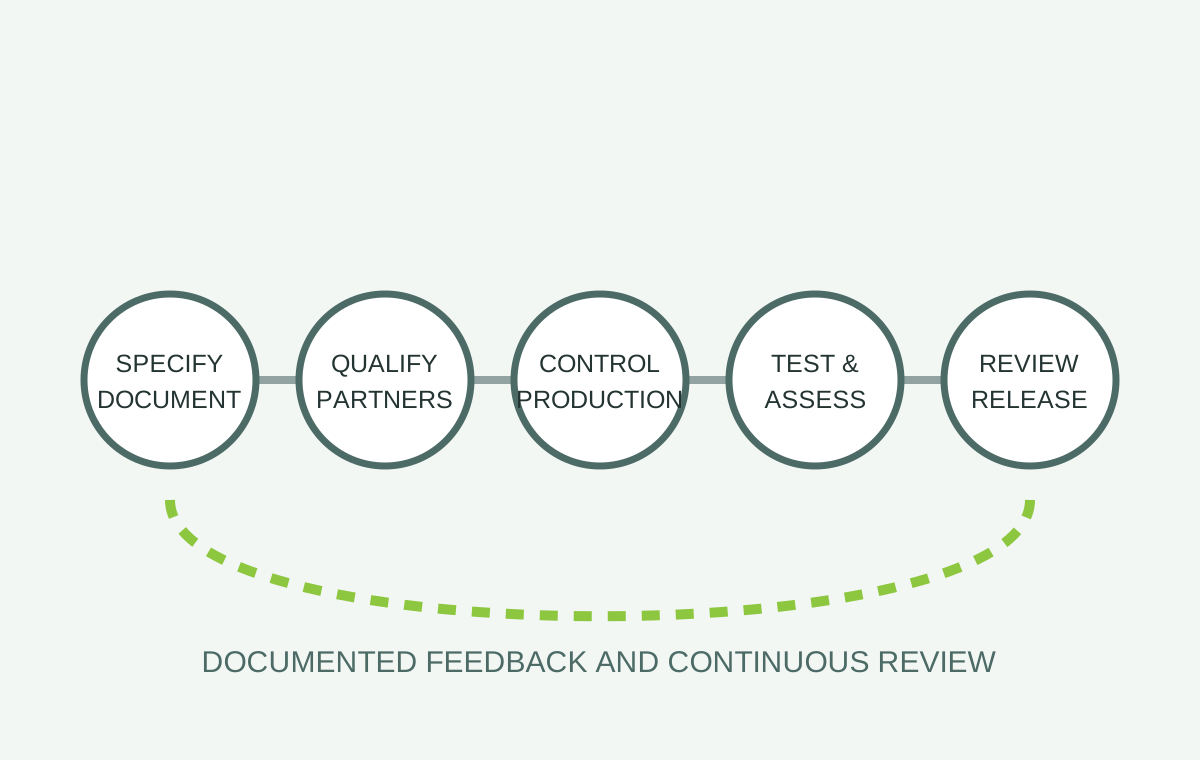
Define the question
Identify the product, risk, acceptance criteria and decision the work must support.
Use an appropriate method
Select the laboratory, protocol, sample and conditions relevant to the category.
Review the result
Compare the result with specifications, legal requirements and the intended product information.
Document the action
Release, correct, investigate, repeat, reformulate or update information as necessary.
Sources and further reading
- EU Cosmetics Regulation (EC) No 1223/2009
- ISO 22716 — Cosmetics good manufacturing practices
- EU Food Supplements Directive 2002/46/EC
- EU CLP Regulation (EC) No 1272/2008
- EU General Product Safety Regulation (EU) 2023/988
These sources provide background and verification. Current product labels, official requirements and supporting product records remain the practical reference.
Related information
Connect testing to the wider quality process
Use these pages for the next level of detail.
Inputs
Ingredients & materials
How specifications and ingredient choices create the basis for testing.
Open page →Production
Manufacturing & GMP
How in-process and release responsibilities connect to qualified manufacturers.
Open page →Communication
Responsible claims
Why a test supports only the product, method and outcome it actually covered.
Open page →What a test answers
Testing is selected to answer product-specific questions
A long list of test names is less useful than explaining the risk or performance question each test is meant to address.
Stability and compatibility
Stability work can examine whether relevant physical, chemical or sensory characteristics remain acceptable over the intended life. Packaging compatibility asks whether the formula and container remain suitable together. Protocols and acceptance criteria depend on the product.
Microbiological and safety assessment
Microbiological controls, preservative strategy and formal safety assessment are selected according to category, formulation and exposure. A result supports the tested conditions; it should not be stretched into an unrelated health or efficacy claim.
User-facing evidence
Dermatological, consumer or performance testing can be relevant for specific claims when the method and product match the wording used. The site avoids converting an ingredient study or supplier statement into a finished-product result without product-level support.
For the wording step after evidence is reviewed, see responsible claims. For manufacturing scope and certificate boundaries, see manufacturing & GMP.