
Manufacturing & GMP
How Telmone coordinates manufacturing and GMP controls
Telmone coordinates product work through affiliated or managed capabilities and qualified European contract manufacturers. Telmone.nl itself does not directly own a factory.
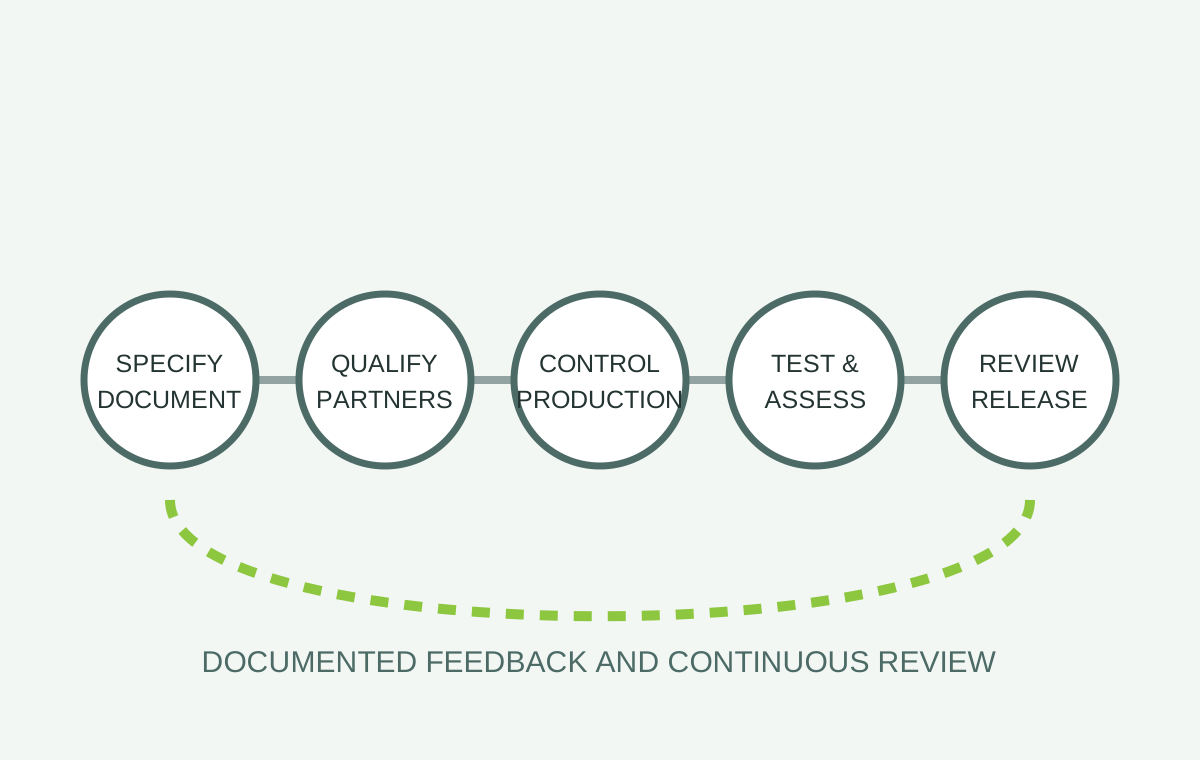
Process diagram. It does not depict a specific factory, laboratory or certificate holder.
Manufacturing model
Product work is coordinated across qualified capabilities
Telmone defines product and brand requirements, works with internal or managed expertise, and uses qualified European contract manufacturers for production. The exact arrangement can differ by product and category.
Manufacturer identities and exact locations may be commercially confidential. The quality obligation remains: relevant capabilities, certificates, specifications, testing, documentation and release controls must be reviewed before they are relied upon.
The Venlo address is a listing and correspondence address. It is not presented as a public factory, laboratory or warehouse.
- Telmone.nlCompany and coordination role; no directly owned facility
- ManufacturingAffiliated, managed or qualified outsourced European capabilities
- GMPApplied through the relevant manufacturer and process
- CertificatesBelong to the named holder and stated activity
- Public evidenceDescribed without disclosing confidential manufacturing-partner identities
GMP in context
The manufacturing controls depend on the product category
GMP is meaningful only when the certificate, holder, facility, activity, product category and validity are clear. Different categories therefore require different manufacturing and regulatory controls.
Cosmetics and personal care
Cosmetic production is connected to the EU cosmetics framework, product safety assessment, ingredient and label controls, and cosmetic GMP practices such as ISO 22716 where applicable to the manufacturing facility.
Food supplements
Food-supplement manufacturing is connected to food law, hygiene, HACCP-based controls, ingredient and composition requirements, labelling, authorised claims and the relevant GMP or quality systems held by the manufacturer.
Home-care products
Home-care production is connected to formula and ingredient controls, classification and labelling where applicable, packaging compatibility, stability, safe-use information and facility quality systems.
Sleep products and textiles
Textile and sleep categories rely on material and supplier specifications, construction and dimensional checks, fibre and care labelling, traceability and applicable factory quality controls.
Partner qualification
What is checked before a manufacturing relationship is relied upon
The exact checklist is category- and risk-dependent, but the underlying questions remain consistent.
Capability
Can the manufacturer make the required product, process or construction consistently?
Documentation
Are current certificates, quality procedures, specifications and responsible contacts available for review?
Controls
Are material receipt, production, hygiene, in-process checks, traceability and release responsibilities defined?
Change management
Are formula, material, supplier, process or packaging changes communicated and evaluated before use?
Follow-up
Are non-conformities, complaints and corrective actions documented and reviewed?
What a certificate means
A certificate supports a defined activity; it is not a transferable badge
A valid certificate can support confidence in the named holder, site, process and period it covers. It does not automatically certify every product, every supplier, another company or Telmone.nl as a website. Public wording is therefore kept tied to the actual holder and manufacturing context.
Sources and further reading
- EU Cosmetics Regulation (EC) No 1223/2009
- ISO 22716 — Cosmetics good manufacturing practices
- EU Food Supplements Directive 2002/46/EC
- EU Detergents Regulation (EC) No 648/2004 — relevant during the transition
- EU Regulation (EU) 2026/405 on detergents and surfactants — applies from 23 September 2029
- EU General Product Safety Regulation (EU) 2023/988
Transition note: Regulation (EU) 2026/405 entered into force in 2026 but generally applies from 23 September 2029. Regulation (EC) No 648/2004 remains relevant during the transition.
These sources provide background and verification. Current product labels, official requirements and supporting product records remain the practical reference.
Related information
Follow the quality chain
Use these pages for the next level of detail.
Inputs
Ingredients & materials
How product inputs are selected, specified and reviewed before manufacturing.
Open page →Evidence
Testing & safety
How testing and assessment support product release and ongoing review.
Open page →Company
Locations and operations
Why the listed Dutch address is not presented as a manufacturing site.
Open page →Control chain
What Telmone expects manufacturing evidence to show
The useful question is not “is there a certificate?” but whether the documented facility, process and scope match the product being discussed.
Before production
Category requirements, product specification, ingredient or material requirements, packaging compatibility and the proposed manufacturing route should be defined before release. Supplier and facility documents are reviewed in the context of the actual activity they cover.
During qualification and production
Applicable GMP controls, documented procedures, traceability, in-process controls and agreed testing are assessed according to product category and manufacturing stage. Not every product requires the same tests or the same certification scheme.
Before and after release
Batch or lot documentation, label and pack checks, relevant test results, deviations and change control provide the evidence chain for release and later review. Significant formula, supplier, process or packaging changes can trigger renewed assessment.
Certificate boundary
A certificate should be read by holder, site, standard, scope, issuing body and validity period. Telmone.nl does not present a contract manufacturer’s certificate as if the Dutch company website or correspondence address were the certified production site.