Telmone-defined operating model
Digitally Enhanced Directed Autonomy
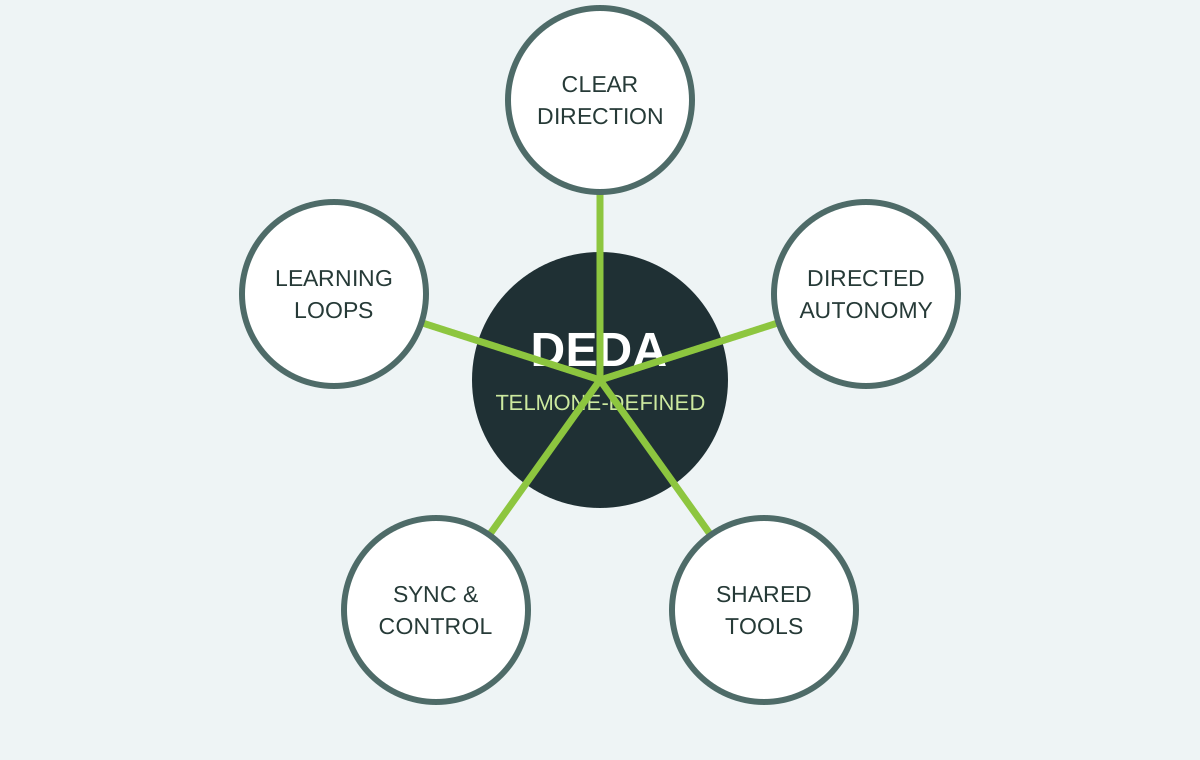
DEDA is Telmone’s practical system for organising distributed work: explicit direction and accountability combined with meaningful autonomy, shared digital tools and documented learning loops.
Definition
What DEDA means at Telmone
Digitally Enhanced means that communication, planning, training, documentation, coordination and performance visibility are supported by connected internal and external tools.
Directed Autonomy means that people have room to decide how to complete work inside explicit objectives, roles, constraints, quality expectations and review points.
The model is remote-by-design rather than an office process copied into video calls. It is presented as Telmone’s own operating approach, not as an external accreditation or universal management standard.

Five connected elements
Direction without unnecessary centralisation
Clear direction
Priorities, desired outcomes, ownership, timing, evidence and decision rights are made explicit before execution begins.
Directed autonomy
People choose appropriate methods and sequencing within the agreed boundaries, escalating exceptions rather than waiting for every instruction.
Shared digital environment
Internal and external tools support communication, planning, synchronisation, training, recruitment, documentation and control.
Rhythms and controls
Work is synchronised through defined hand-offs, review points, indicators and accountable follow-up—not through continuous surveillance.
Learning loops
Results, exceptions, customer feedback and quality findings are converted into updated instructions, training and process improvements.
Planning
Work packages define purpose, owner, dependencies, evidence and review date.
Communication
Channels are selected by urgency, permanence and audience; decisions are recorded where others can retrieve them.
Training
Onboarding and role development combine reusable material, guided practice and observable outcomes.
Leadership
Leaders clarify boundaries, unblock work and review results rather than attempting to control every action.
Recruitment
Remote suitability includes written communication, self-organisation, evidence handling and the ability to work within defined controls.
Quality
Documented responsibilities and review points connect the operating model to product, content and supplier controls.
How the model is applied
Autonomy is not absence of control
DEDA aims to reduce ambiguity and unnecessary coordination while keeping responsibilities visible. It does not remove legal duties, product controls, security requirements, management accountability or the need for escalation.
- DirectionOutcomes, constraints and decision rights
- AutonomyChoice within agreed boundaries
- EvidenceWork products, decisions and review records
- ControlProportionate checkpoints and exception handling
- LearningFeedback incorporated into the system
DEDA also informs Telmone’s business systems
The Sales Generator section explains the customer-lifecycle and distributed-operation context without promising unsupported performance outcomes.
Digital coordination
See the public responsibility for Telmone’s online information environment and digital operations.
Iryna Kumer →People operations
See how recruitment, onboarding and training connect to the DEDA model.
Inna Tutik →Business applications
Explore how Telmone applies distributed coordination to commercial operations.
Business overview →