
Standards & certifications
Useful evidence when the holder, activity and validity are clear
Telmone refers to GMP, ISO and other quality frameworks only in relation to the manufacturer, facility, process, product category and period they actually cover.
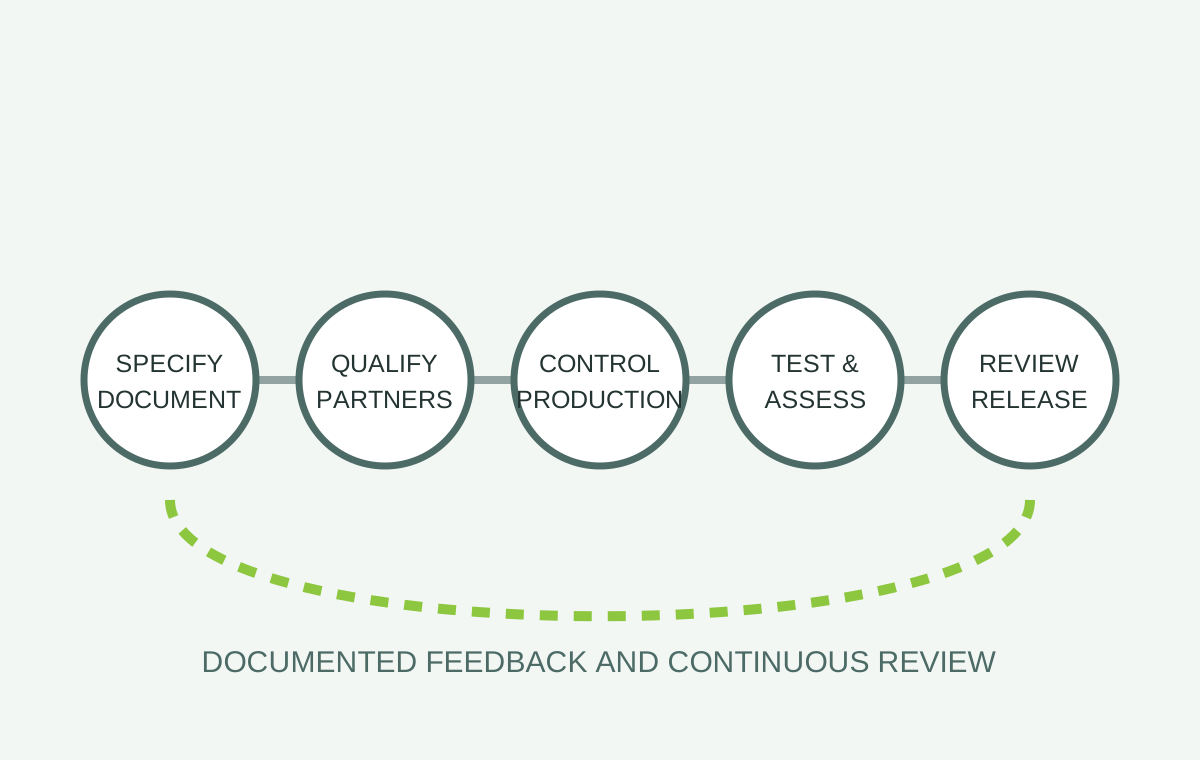
How to read a certification claim
Five details matter more than the logo
- Holder: which legal entity or facility is named?
- Activity: which manufacturing or management activity is covered?
- Standard: which GMP, ISO or other framework is referenced?
- Validity: what is the issue, expiry or current-status information?
- Product connection: how does that certified activity relate to the actual product?
A certificate can be valuable evidence, but it does not automatically certify another company, website, ingredient claim or every product made by the holder.
Telmone.nl position
Telmone.nl does not claim that its Dutch correspondence address is a GMP-certified factory. Relevant certificates are held by the facilities or organisations that perform the covered activities.
Category context
Different products rely on different frameworks
The examples below explain the type of connection; exact certificates and applicability must be checked in current product and manufacturer documentation.
Cosmetic GMP and ISO 22716
ISO 22716 provides guidance for cosmetic good manufacturing practices. Where referenced, it should be connected to the relevant cosmetic manufacturing facility and activities.
Food and supplement quality systems
Food-supplement production may rely on food hygiene, HACCP-based controls and relevant GMP or ISO-certified systems held by the manufacturer.
Quality management standards
Standards such as ISO 9001 may support a quality-management system, but do not by themselves demonstrate the safety, composition or performance of a specific product.
Material and product-specific evidence
Textile, packaging, ingredient or environmental claims may require separate supplier documentation, test reports or recognised certification relevant to the exact material or product.
Public verification
How certification information will be added when available
Where Telmone can publish supporting evidence, the page should identify the standard, holder, covered activity, issuing body, validity and relationship to the product. Redacted documents may be used when confidential information must be protected, provided the remaining information is still meaningful.
Until that evidence is available for publication, the site describes the quality process without presenting unverified certificate numbers or facility claims.
Sources and further reading
- EU Cosmetics Regulation (EC) No 1223/2009
- ISO 22716 — Cosmetics good manufacturing practices
- EU Food Supplements Directive 2002/46/EC
- EU Detergents Regulation (EC) No 648/2004 — relevant during the transition
- EU Regulation (EU) 2026/405 on detergents and surfactants — applies from 23 September 2029
- EU CLP Regulation (EC) No 1272/2008
- EU Textile Fibre Names and Labelling Regulation (EU) No 1007/2011
- EU General Product Safety Regulation (EU) 2023/988
Transition note: Regulation (EU) 2026/405 entered into force in 2026 but generally applies from 23 September 2029. Regulation (EC) No 648/2004 remains relevant during the transition.
These sources provide background and verification. Current product labels, official requirements and supporting product records remain the practical reference.
Related information
Use standards in context
Use these pages for the next level of detail.
Manufacturing
Manufacturing & GMP
See how standards connect to qualified facilities and product categories.
Open page →Testing
Testing & safety
Understand why a certificate does not replace product-specific checks.
Open page →Claims
Responsible claims
See how certification and environmental language is kept precise.
Open page →Certificate literacy
How to read a standard or certificate before citing it
The existence of a certificate is not enough; the public statement must match the document’s actual scope.
Holder and site
Check the legal holder and, where applicable, the exact site or facility. A certificate held by a contract manufacturer does not certify Telmone.nl, a retailer or a correspondence address.
Standard and scope
Check the standard name and edition, the certified activity, product category and exclusions. “GMP certified” should not be used as a broad umbrella if the document applies only to a narrower activity.
Validity and issuer
Check issue and expiry dates, certificate number where publication is appropriate, and the certification or inspection body. When a current public copy cannot be published, Telmone should describe the verification boundary rather than inventing a certificate claim.